Recap:
• Unusual sounds, rising temperatures, ice buildup, and higher energy bills are the most common signs a commercial walk-in cooler needs professional attention.
• Phoenix heat puts extra strain on condenser coils and seals, so problems can escalate faster than in cooler climates.
• Prompt diagnosis protects food safety compliance and prevents costly inventory loss.
A commercial walk-in cooler that runs longer than usual, struggles to hold temperature, or makes unfamiliar noises is signaling a mechanical problem that will not resolve on its own. Catching these symptoms early is the difference between a same-day fix and a full system failure that shuts down a kitchen or grocery cooler.
Restaurants, warehouses, and grocery operations across the Valley rely on steady refrigeration to keep inventory safe and avoid health code violations. When a unit starts acting up, scheduling Commercial Walk-In Cooler Repair in Phoenix quickly can prevent a minor coil or seal issue from turning into a full compressor replacement. Because Phoenix summers push ambient temperatures well above 100 degrees for months at a time, condenser units already work harder here than in most other markets, which shortens the window between “something feels off” and “the unit has failed.”
Early Signs of a Failing Walk-In Cooler
Most walk-in refrigeration failures give warning signs days or weeks before a complete breakdown. Recognizing these patterns lets a business owner call for service before food safety is compromised.
• Inconsistent temperatures : Readings that swing more than a few degrees between checks often point to a failing thermostat or refrigerant leak.
• Excess frost or ice buildup : A frozen coil usually means the defrost system or door seal has stopped working properly.
• Water pooling on the floor : This is commonly linked to a clogged drain line or a compromised door gasket letting in humid air.
• Unusual noises : Buzzing, clicking, or rattling sounds can indicate a worn fan motor or a compressor under strain.
• Longer run cycles : A compressor that never seems to shut off is working overtime, often due to dirty coils or low refrigerant.
• Rising energy bills : A sudden jump in utility costs without a change in usage often reflects a unit losing efficiency.
Why Phoenix Heat Accelerates Cooler Problems
Outdoor condenser units mounted on rooftops or exterior walls in Phoenix are exposed to some of the highest ambient temperatures in the country for much of the year. That heat load makes it harder for the system to reject heat efficiently, so components like fan motors and compressors run under more stress than they would in a milder climate.
Consistent cold holding is not just a comfort issue, it is a food safety requirement. According to the USDA Food Safety and Inspection Service, perishable food left in the temperature danger zone allows bacteria to multiply quickly, which is why walk-in units must consistently hold safe cold-holding temperatures. A cooler that cannot maintain that range, even briefly, puts every case of inventory inside it at risk.
DIY Checks vs. Professional Diagnosis
Some issues can be spotted with a quick visual inspection, but diagnosing the root cause of compressor or refrigerant problems requires specialized tools. The table below outlines what business owners can reasonably check themselves versus what calls for a technician.
| Issue | What You Can Check | When to Call a Technician |
| Door seal gaps | Visually inspect gasket for cracks or warping | If seal replacement does not stop air leaks |
| Frost buildup | Note frequency and location of ice | If frost returns within days of clearing it |
| Unusual noise | Identify when the noise occurs (startup, cycling, constant) | Any grinding, buzzing, or clicking that persists |
| Temperature swings | Log readings twice daily | Any reading outside the safe range for more than an hour |
What Happens During a Professional Repair Visit
A qualified technician follows a structured process to isolate the failure point rather than guessing at parts.
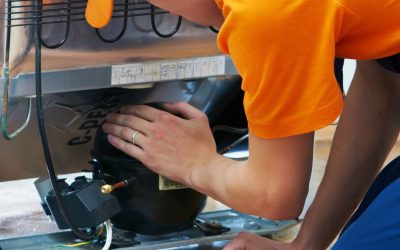
1. Initial diagnostics : Technicians check refrigerant levels, electrical components, and airflow across both evaporator and condenser coils.
2. Coil inspection : Condenser coils (outdoor) and evaporator coils (indoor) are examined for dirt, damage, or ice buildup that restricts airflow.
3. Component testing : Fan motors, compressors, control boards, and thermostats are tested individually to confirm which part has failed.
4. Repair or replacement : Depending on the diagnosis, the technician repairs the faulty component or recommends a full refrigeration system replacement if the unit is beyond economical repair.
Frequently Asked Questions
How quickly should a failing walk-in cooler be repaired? Any noticeable temperature drift or unusual sound should prompt a service call within the same day, since delayed repairs risk both inventory loss and health code violations.
Can dirty condenser coils really cause a full breakdown? Yes. Restricted airflow from dirty or blocked coils forces the compressor to run longer and hotter, which accelerates wear and can lead to premature failure.
Is it normal for a walk-in cooler to run constantly? No. A compressor that never cycles off is a sign of an underlying issue, such as low refrigerant, a faulty thermostat, or coils that need cleaning.
What areas near Phoenix are typically served for this type of repair? Commercial refrigeration repair providers in the region commonly serve Phoenix, Scottsdale, Chandler, Mesa, and surrounding communities.
Keeping Your Cooling System Reliable
A walk-in cooler that shows early warning signs deserves attention before it becomes an emergency shutdown. Businesses that track temperature logs, listen for unusual sounds, and address door seal or coil issues quickly tend to avoid the most expensive repair scenarios. For Phoenix-area restaurants, grocery stores, and warehouses, having a trusted refrigeration partner on call makes it easier to act at the first sign of trouble rather than after a full breakdown. Lux Appliance Care provides certified technicians who diagnose and repair commercial walk-in coolers and freezers throughout the Phoenix metro area, helping local businesses keep their inventory safe and their operations running.